Pawflix Logo

Pawflix

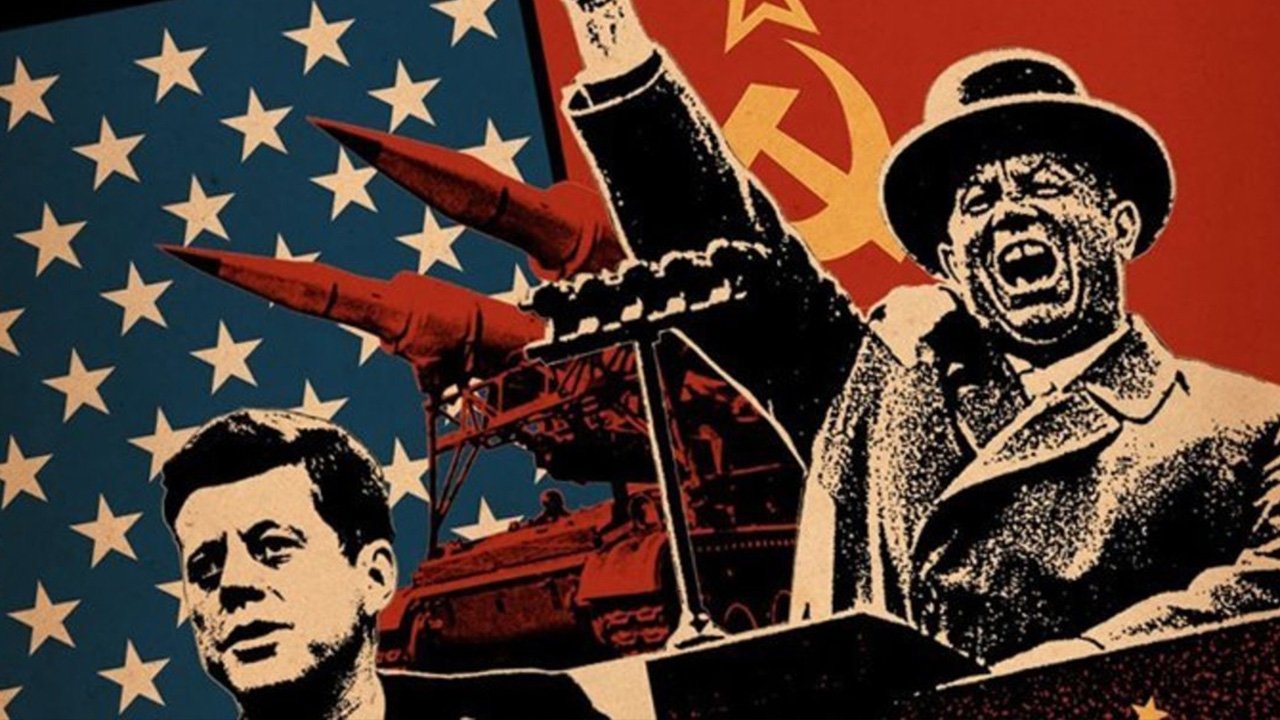
Cold War

6.9(14 votes)
1998

If a source does not work please use another!

Episodes
Comrades (1917-1945)
46m

1. Comrades (1917-1945)

Despite their ideological differences, the United States and the Soviet Union become allies in the wars against Germany.

Iron Curtain (1945–1947)
46m

2. Iron Curtain (1945–1947)

Stalin begins to spread communism across Europe after the war ends, and tension grows between the United States and the Soviet Union.

Marshall Plan (1947–1952)
46m

3. Marshall Plan (1947–1952)

The United States offers assistance to countries that reject communism after Great Britain halts aid to Turkey and Greece.

Berlin (1948–1949)
46m

4. Berlin (1948–1949)

Berlin is divided into two separate cities, and Europe itself splits as the countries align themselves with the opposing major powers.

Korea (1949–1953)
46m

5. Korea (1949–1953)

A Chinese civil war between the factions of Mao Zedong and Chiang Kai-Shek brings the armed forces of the United States onto the battlefield to oppose communism.

Reds (1948–1953)
46m

6. Reds (1948–1953)

A look at the period in which Stalin securely dominated eastern Europe, China embraced communism, and anti-communist hysteria spread in the United States.

After Stalin (1953–1956)
46m

7. After Stalin (1953–1956)

Stalin's death brings hope that tensions will ease between the Soviet Union and the United States, and Nikita Khrushchev becomes the new Soviet Leader.

Sputnik (1949–1961)
46m

8. Sputnik (1949–1961)

The Soviet Union launches its first satellite into orbit while the United States' own space program lags behind.

The Wall (1958–1963)
46m

9. The Wall (1958–1963)

The Soviet Union solves the problem of people leaving East Germany to the free West by stopping open transit and building a secured ring around West Berlin.

Cuba (1959–1962)
46m

10. Cuba (1959–1962)

President Kennedy confronts Kruschev when the Soviet Union begins to deploy nuclear missiles in Cuba

Vietnam (1954–1968)
46m

11. Vietnam (1954–1968)

The United States continues its containment of communism by becoming involved in Vietnam's ongoing struggle, leading to enormous public disapproval of the policy.

MAD (1960–1972)
46m

12. MAD (1960–1972)

A look at how technology shaped the politics of the Cold War era, including the United States' Mutual Assured Destruction strategy and the introduction of missiles with multiple payloads.

Make Love Not War (The 60s)
46m

13. Make Love Not War (The 60s)

An examination of the effects of the Cold War upon the populace, including civil rights movements and protests that led to policy changes.

Red Spring (The 60s)
46m

14. Red Spring (The 60s)

The Soviet Union continues its aggressive European policy by invading Czechoslovakia and crushing the Prague Spring Revolution.

China (1949–1972)
46m

15. China (1949–1972)

The history of communism in China, from Mao Tse-tung's victory to President Nixon's trip to China in 1972.

Detente (1969–1975)
46m

16. Detente (1969–1975)

A look at the era of detente that resulted in cooperation and exchange between the United States and the Soviet Union.

Good Guys, Bad Guys (1967–1978)
46m

17. Good Guys, Bad Guys (1967–1978)

An examination of how the major powers fought by proxy in different areas of the world throughout the era.

Backyard (1954–1990)
46m

18. Backyard (1954–1990)

The United States utilizes different ways to fight the spread of communism in its own hemisphere, from Guatamala to Grenada.

Freeze (1977–1981)
46m

19. Freeze (1977–1981)

Unrest in Eastern Europe and the Oil Crisis threatens to undermine the progress made by detente.

Soldiers of God (1975–1988)
46m

20. Soldiers of God (1975–1988)

An examination of the effects of religious fundamentalism upon the United States and the Soviet Union's foreign policies.

Spies (1944–1994)
46m

21. Spies (1944–1994)

A look at the hidden front of the Cold War involving subterfuge and secret intelligence gathering.

Star Wars (1981–1988)
46m

22. Star Wars (1981–1988)

The Soviet Union's economy falters as it struggles to keep up in the arms and technology race.

The Wall Comes Down (1989)
46m

23. The Wall Comes Down (1989)

The Soviet Union loses its grip on Eastern Europe as the Berlin Wall comes down and the Cold War comes to an end.

Conclusions (1989–1991)
46m

24. Conclusions (1989–1991)

The Cold War era comes to an end as the Soviet Union's empire falls and new policies are implemented by Mikhail Gorbachev and Boris Yeltsin.

Overview

A 24-part series which deals with the relations between the United States, the Soviet Union and their respective allies between the end of World War II to the collapse of the Soviet Union in 1991.

Details

Genres

Documentary

Language

EN

First Air Date

1998-09-19

Seasons

1

Episodes

24

More Info

Cast

Kenneth Branagh

Kenneth Branagh